Six Pumpkin Crafts for Labor Day. . . I Mean, Halloween!

With Labor Day weekend officially underway, folks are still trying to hang on to those last precious bits of summer with cook outs, lazy days at the beach, and last-minute getaways.  But even on this sunny, decidedly summer day, I see signs of the coming fall all around, especially at the supermarket – most notably in the massive displays of Halloween candy already on the shelves.  Move over, s’mores, make way for the candy corn and pumpkin Peeps!  I’m actually ready to bid goodbye to summer, as fall is my favorite season – the amazing foliage, apple picking (and baking!) and of course, Halloween.  My son is getting a little old for trick-or-treating, but we still indulge in the decorating.  We’re going to mix it up this year and try out these alternatives to the traditional jack-o-lantern carving!

Dripping melting crayon wax onto pumpkins turns them into festive Halloween decor (and makes use of all those little crayon stubs):

crayon pumpkins

Does glitter flow through your veins?  It does through mine; I’m going to get my fix with these quick and easy glittered pumpkins:

glittered pumpkins

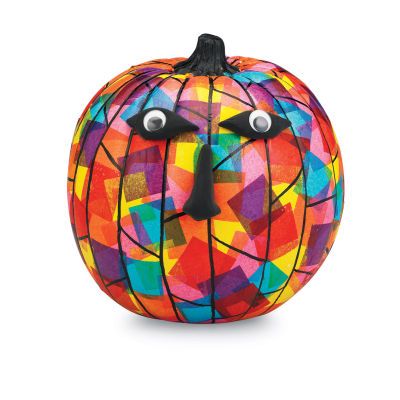
Colorful tissue paper squares and googly eyes make this embellished pumpkin craft project fun for the whole family!

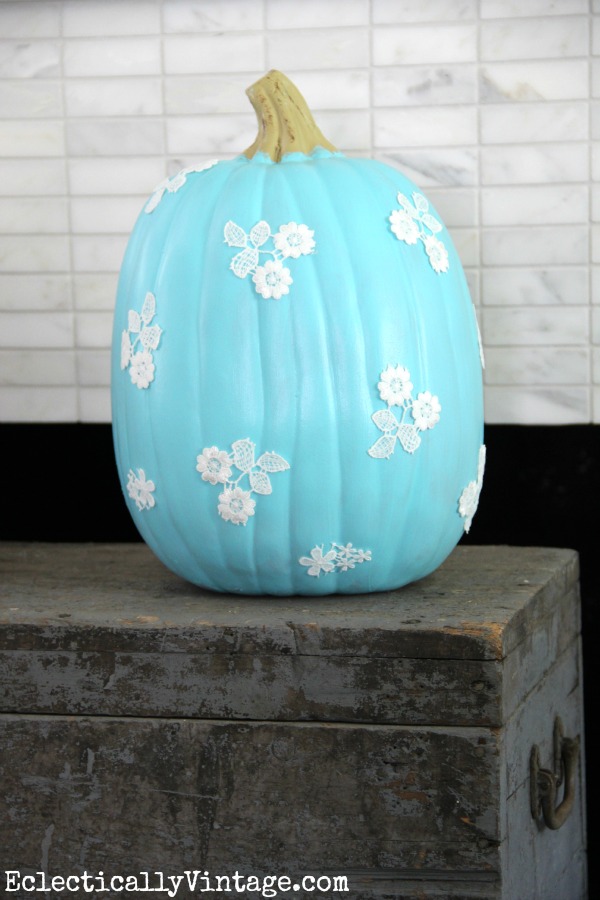
tissue paper pumpkinThis decoupage lace pumpkin craft lends a lovely vintage look to your decorating project:

Lace-Pumpkin-DIY

Love all things bling?  Jewel-studded pumpkins and a sparkly spider make a bold statement:

pumpkins-with-rhinestones-1010-xl

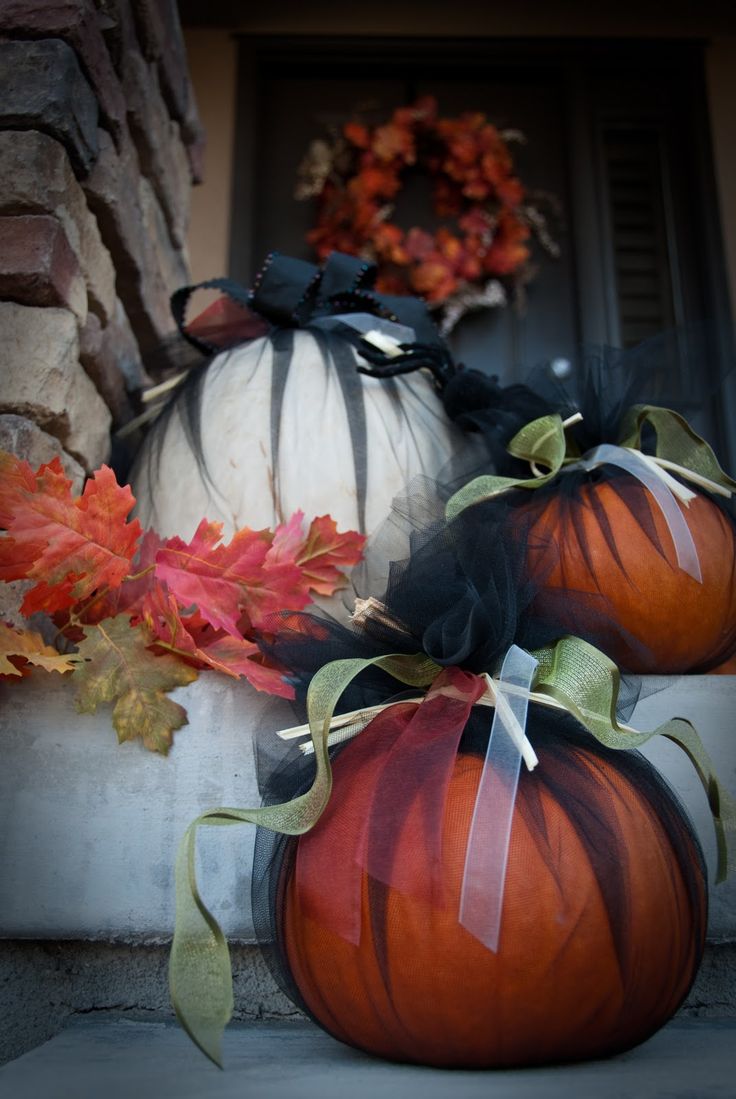
Try wrapping your pumpkins in black tulle and tying some seasonal ribbons on the stem for this sophisticated look:

black tulle pumpkins

What are your favorite decorating traditions for Halloween?  Let me know in the comments!

Plugging in when your middle-schooler wants to cut the cord

I’m always looking for opportunities to stay involved in my son’s educational experience, which has gotten a little trickier since he moved up to middle school.  In elementary school, there were more ways for me to feel plugged in to his experience, as well as to engage with teachers and staff.   Now there are no more apple picking trips, family dance nights or in-class birthday/ Halloween/ Valentine’s Day/Thanksgiving  celebrations (that I’m allowed to attend, anyway).  The elementary school felt like an extension of home – my son would run up to me and give me a hug if he saw me in the hallway while dropping off books for the book fair or volunteering in the cafeteria on pizza Fridays.  Although I have a wonderful relationship with his teacher and staff at the middle school, sometimes I feel like an  interloper; kids I’ve known since they were in kindergarten look at me like an alien life form if they see me anywhere in the vicinity of the middle school.  I feel as though they think that the anti-bacterial dispensers stationed in the hallways should contain parent repellent instead of Purell.  And (sniffle) I’ve seen my son do a double-take if I show up unexpectedly in the hallway, like “uh, what’s she doing here?”

I found some great suggestions for staying actively involved in your child’s school while he or she is trying mightily to pretend that you don’t exist in  10 Tips for Middle School Parents via SchoolFamily.com:

  1. Get to know the teachers. It’s a good idea to meet each of your child’s teachers.  Ask about their expectations. Find out how much time your child should spend on homework each night. Find out whether there will be regularly scheduled tests and if so, when. Ask about the best way to get in touch if you have questions. If the teachers use email, be sure to get their addresses.
  2. Find a niche for yourself at your child’s school. Unlike in the lower grades, middle school classrooms don’t need extra adults on hand. But you can volunteer in other ways.  Serve as an adviser for an extracurricular activity such as the school paper, chess club, or science fair. Help out in the computer lab. Being in the school is a great way to get a feel for what goes on there.
  3. Do behind-the-scenes work. If you can’t be in school during the day, ask teachers and other school personnel to pass along some work that you can do on your own. Photocopy homework assignments; collect recyclables for a science or art project; serve on a parent-school advisory council; join your middle school PTO or PTA.
  4. Volunteer to chaperone school dances and drive kids to school sports competitions. You’ll meet other parents, school staff, and your child’s classmates.
  5. Go to school meetings and events. Attending concerts, plays, assemblies, meetings, and other activities is a good way to become familiar with your child’s school community.
  6. Find out about homework assignments and school tests. If your school has a website where teachers list homework assignments, get in the habit of checking it regularly. If not, contact your child’s teachers and ask them to alert you when there’s an important project or test coming up.
  7. Talk to your child about school. Ask specific questions to draw out your child. Ask “How do you think you did on the math test?” “Did Mr. Phipps say anything funny today?” “What games did you play in PE?”
  8. Give your child a quiet place to study and do homework. Find an area in your home that is free of distraction where your middle schooler can concentrate on homework. Be available to help if your child has a question.
  9. Check your child’s homework, but don’t do it for her. Offer to check math problems, proofread written papers, and look over spelling words. If you find a mistake, point it out to your child and help her figure out the correct answer.
  10. Post a family calendar in a central place. Write down important school dates, including parent meetings, due dates for projects, and tests. Encourage your middle schooler to add to the calendar and to check it daily. 
Middle school can be a confusing time for everyone, so  I’m all in favor of anything that keeps me in the loop in the most unobtrusive way possible.  I know it’s healthy and inevitable for our middle-schoolers to start asserting some independence but, whether they realize it or not, they need us now more than ever, right?  Someone validate me, please (I don’t think my middle-schooler is going to)!

plug in!

How do you check in with your middle-schooler and stay involved in the school scene?  All suggestions are welcome!

time for mom button

Photo courtesy of Mom Meets Blog

Tips for Playroom Organization

Many  happy hours have been whiled away in my son’s playroom, imagining and dreaming with little trains, planes and automobiles strewn in every corner.  It’s also been the site of a few mishaps – as cute as that little Mini Cooper is, stepping on it with a bare foot is a painful encounter!  After some trial and error, here are the organizing solutions that have worked best for me:

  • Before you embark on any organizing mission, if there is a closet in the playroom, clean it out.  That closet will become command central for your kids and their toys, and if they see it organized nicely and can find their toys easily, chances are (maybe) they’ll try to keep it that way.
  • Clear plastic shoe organizers hung on the back of a door or inside a closet door are great “garages” for little cars and other small toys.
  • For instant de-cluttering, make use of plastic storage bins or baskets that can be stored in the closet or under a bed.   Check out The Container Store or even dollar stores for colorful baskets in many sizes and shapes at reasonable prices.
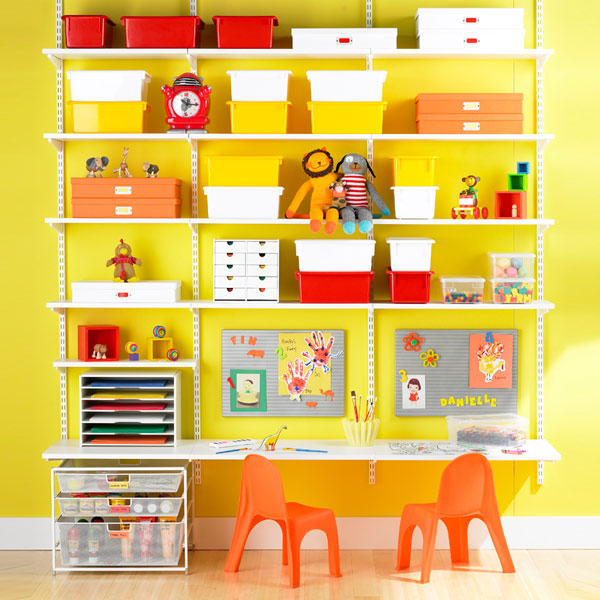
  •  Make use of the vertical space in a room with wall shelves.  For a decorator look, paint the wall a funky accent color before you put up shelves.  I once painted a wall in the playroom fire-engine red and put up elfa shelves like these – they put the fun in functional.

  • Save those shoeboxes and the planet!  Have your kids color and decorate them for creative, homemade storage that can also be used to grace the shelves you just installed.  Nothing says “playroom” like a storage box with a big pair of jiggling googly eyes staring out at you.

  • Make use of double duty furniture.  When buying my son’s big boy bed, I made sure it was both comfy and had drawers for storage (his favorite place for stowing away Legos).  And that good old-fashioned toy chest?  Put a decorative pillow or cushion on the lid for extra seating.
  • Don’t overlook Ziploc plastic bags for labeling and organizing puzzle pieces and doll accessories (and more Legos).
  • Book cases are great for mixed use storage.  Add some baskets filled with toys alongside the books for a neat, organized look.
  • Repurpose what you have at home by thinking outside the box – in this case, tool boxes, old Tupperware, anything that’s not being used for its original purpose but still has storage capacity can be used to store dolls, action figures, whatever needs a home.

The idea is to mix and match the solutions that work for you.  Pay attention to how and when your kids play with and use their toys, and match your organizing solution to their usage.  If some toys are used every day, maybe an open basket on the floor where the toys are easily accessible (and can be put in a closet or rolled under the bed at the end of the day) is the right fit.  Perhaps other toys that are used more infrequently can go up on a shelf or in a closet.  And toys that aren’t used any longer and still in good condition can be donated to charity or, if your kids are older, check and see if their old preschool can make use of them.

Everyone is going to have a different take on organizing, but I’ve found that whatever works for you is the right solution.  Be creative, have fun, and happy organizing!